What Is the Esoteric Meaning of the Devi Mahatmyam?

If you’ve ever read or even heard the Devi Mahatmyam, also known as the Durga Saptashati or Chandi Path, you might have wondered, is this just a mythological tale of gods and demons, or is there something deeper going on? The truth is, this isn’t just a story; it’s a spiritual map, a manual for […]
Song of the Mother: The Forgotten Scripture of the Devi Gita
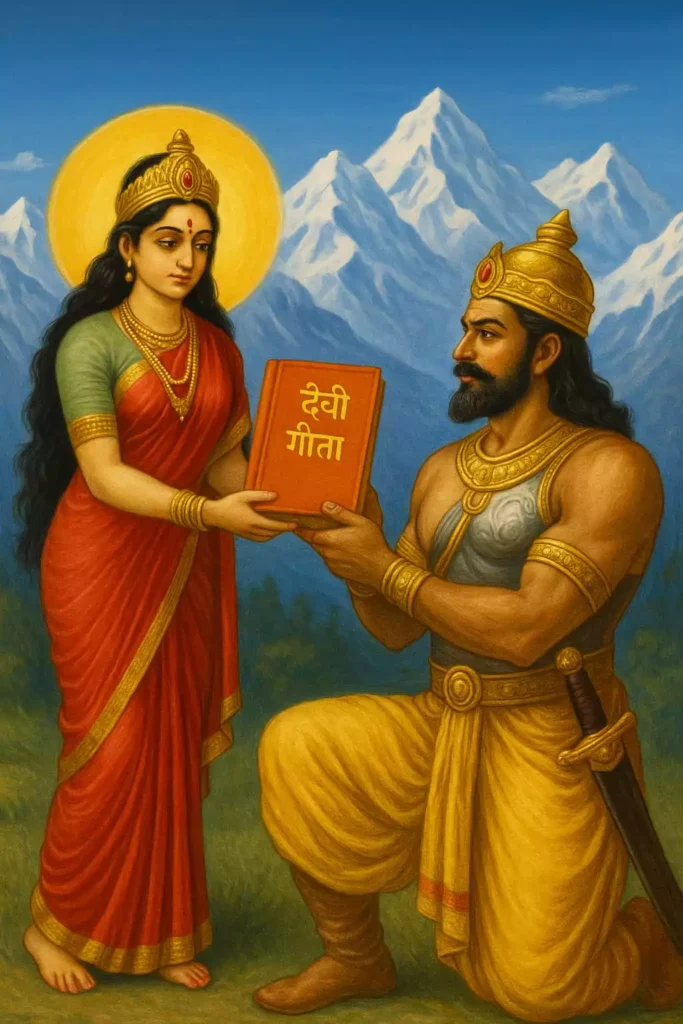
Have you ever heard of the Devi Gita? If not, you’re not alone. Despite its profound wisdom, this sacred text remains hidden in the shadows of more widely known scriptures. Nestled within the Devi Bhagwat Puran, the Devi Gita is a radiant gem where the Goddess doesn’t just appear, she speaks, teaches, and transforms. This […]
The Goddess isn’t a part of the story. She is the story. Srimad Devi Bhagwat Purana
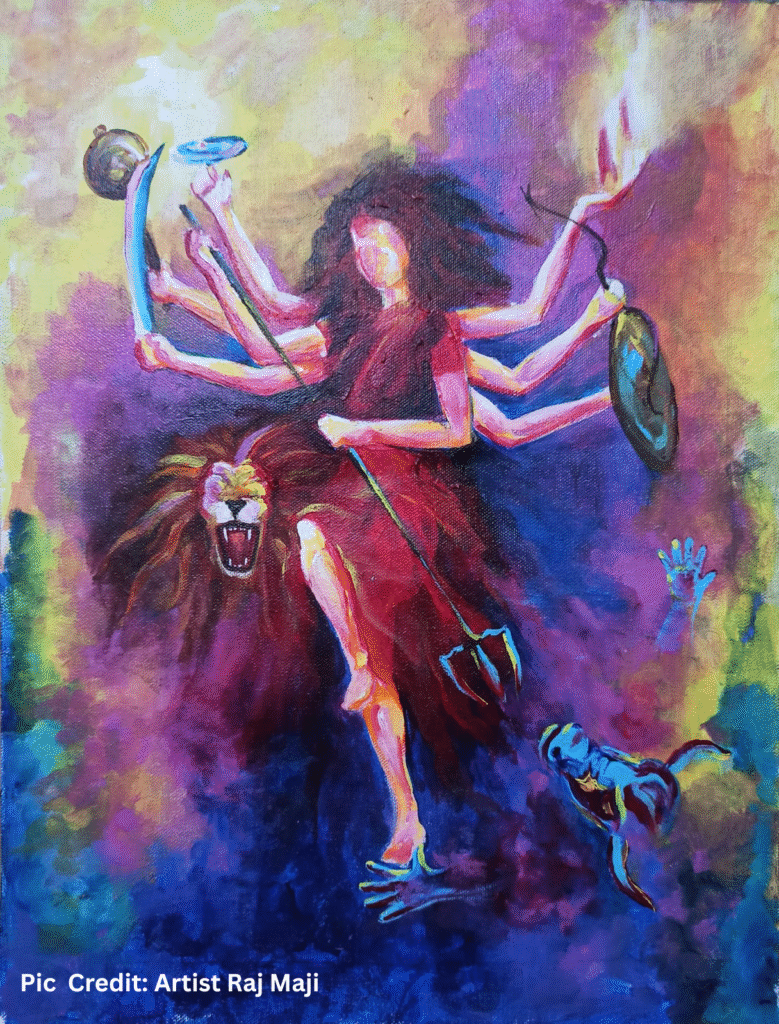
In most traditional scriptures, the divine feminine gets a supporting role. But the Srimad Devi Bhagavata Purana, also known as the Devi Bhagwat Puran, changes that. Here, the Goddess doesn’t assist creation; she is creation. The Srimad Devi Bhagavata Purana is an ancient Sanskrit text that puts the Goddess, not as someone’s consort or shadow, […]
Operation Sindoor: How India Fused Ancient Wisdom & AI In Modern Warfare
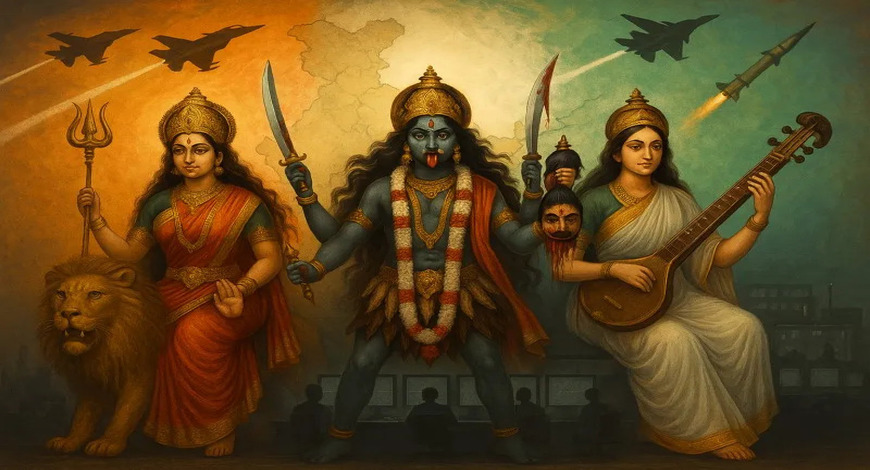
Read this article in Hindi: Click here to read the Hindi version In the Indian tradition, Shakti is not just a goddess. It’s an energy, a principle, and a strategy. The recent Operation Sindoor, where India launched a swift, precise strike against Pakistan’s air defence infrastructure, was not just military brilliance. It was Shakti in […]
WATCH YOUR STEPS, MY LOVE
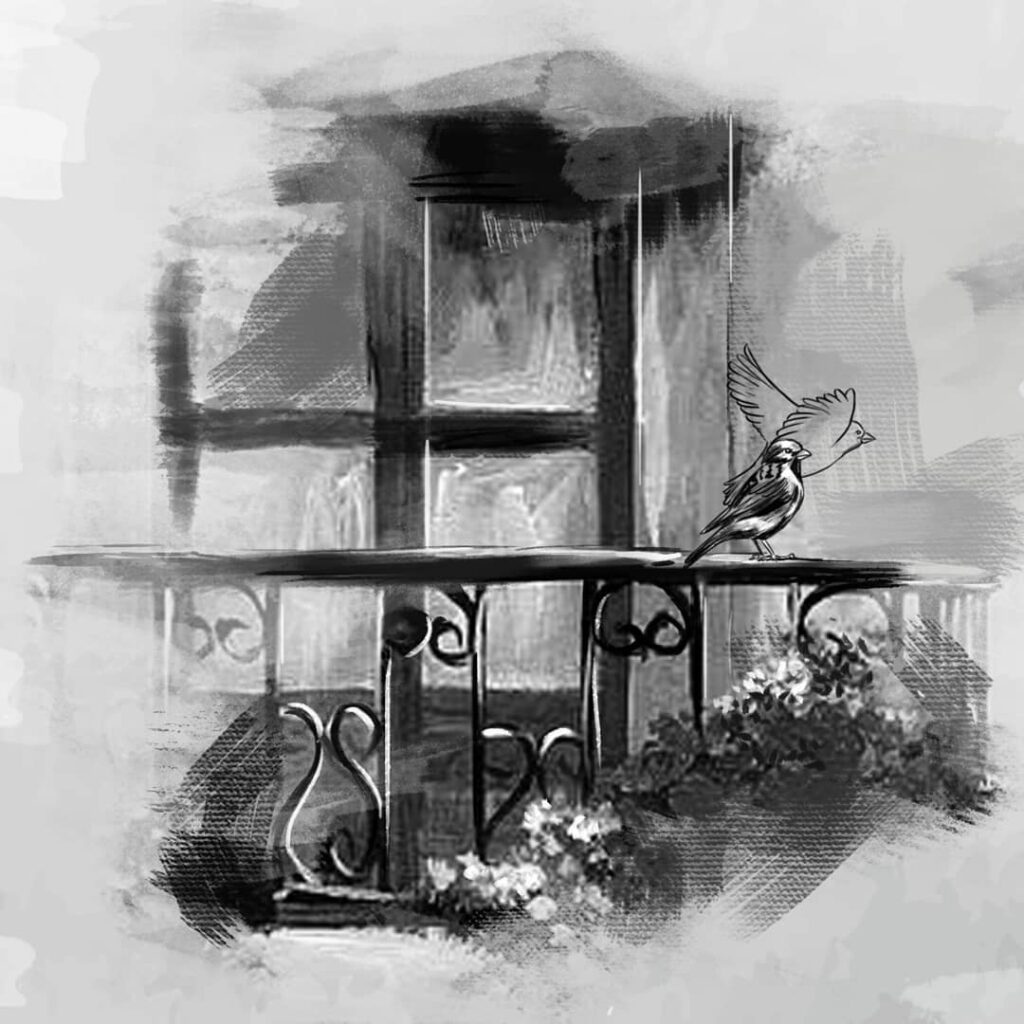
Before I delved deeply into Devi Bhagavata, Chandi Path, and the powerful voices of ancient goddesses, my writing often explored the silent wars of love, longing, and emotional entanglement. This poem, “Watch Your Steps, My Love,” is a quiet echo from those years, an intimate offering from a time when my pen was more attuned to the tender politics […]
The Seven Asuras Women Still Battle in Corporate India

In a world where even the highest offices dismiss DEI as a distraction, this article insists that the real Asura is not diversity, but the forces or those Asuras still keeping women from power. In ancient Hindu stories, now called Indian mythological stories, Asuras were not demons, but forces of imbalance, ego, and chaos. The Devi Bhagavata, a […]
Manusmriti vs. The Vedas: The Forgotten Truth About Women in Hindu Thought
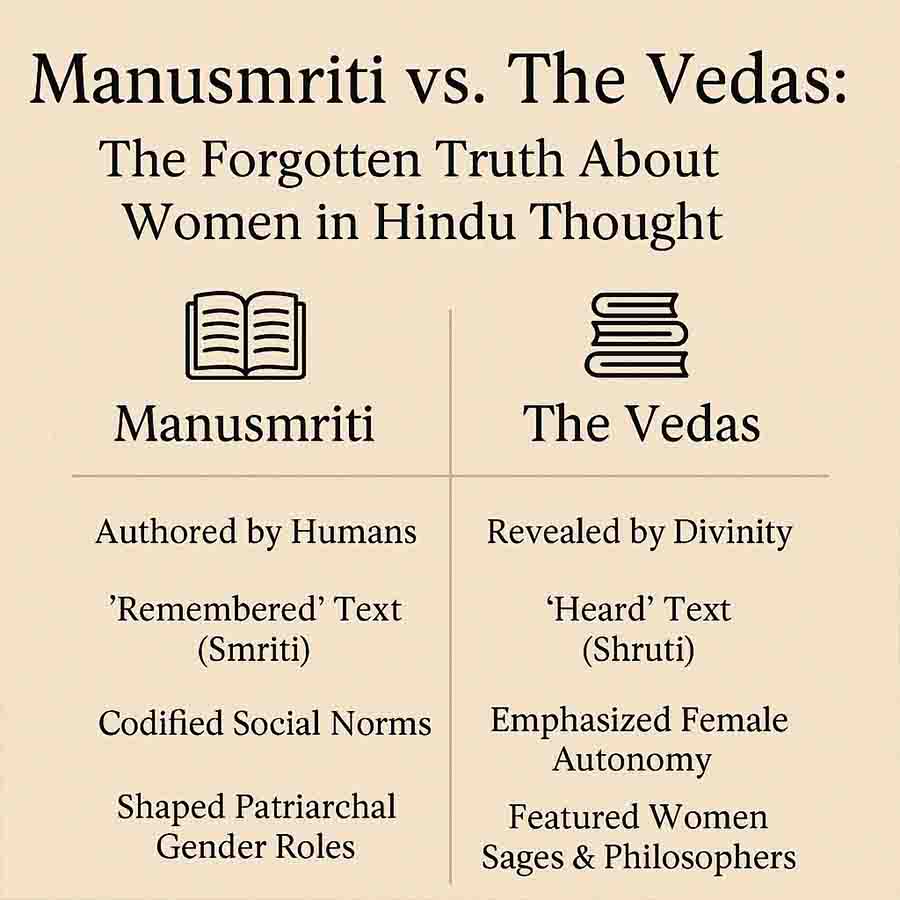
“Hinduism didn’t suppress women. Society did, by following the wrong texts.” There’s a persistent misconception these days that Hinduism, as a religion, inherently suppressed women. That it enshrined patriarchy in scripture and relegated women to the margins of thought, power, and participation. But here’s the truth:. Hinduism didn’t suppress women. Society did, by misreading its […]
Writing as Ritual: How Telling Women’s Stories Became My Spiritual Practice

“Every sentence I write is an offering. Every forgotten goddess, a flame I light again.” There was a time I measured my days in emails, meetings, and targets. Success wore sharp blazers and spoke in quarterly reviews. I was a corporate leader, and I carried that world with pride. But somewhere beneath that structured existence, […]
From Shakti to Silence, from Gargi to Ghoonghat: The Devolution of Women’s Power
There was a time in India when the divine feminine didn’t just reside in temples – she walked the earth. She wrote hymns, led philosophical debates, chose her partners, ruled kingdoms, and even went to war. She was not just worshipped in the form of goddesses like Saraswati, Durga, and Kali – she was them. But […]
Mahadevi: The Supreme Goddess Beyond Religion & Myth

For centuries, Indian mythological stories have woven intricate narratives of gods and goddesses, shaping spiritual traditions across the subcontinent. Among them stands Mahadevi, the all-encompassing feminine divine—the unseen truth behind existence. While many recognize her as Durga, Kali, Lakshmi, or Saraswati, the essence of Mahadevi goes beyond individual forms. She is Shakti, the primal force […]