Beauty is not Random: The Geometry of Tripura Sundari and the Golden Ratio
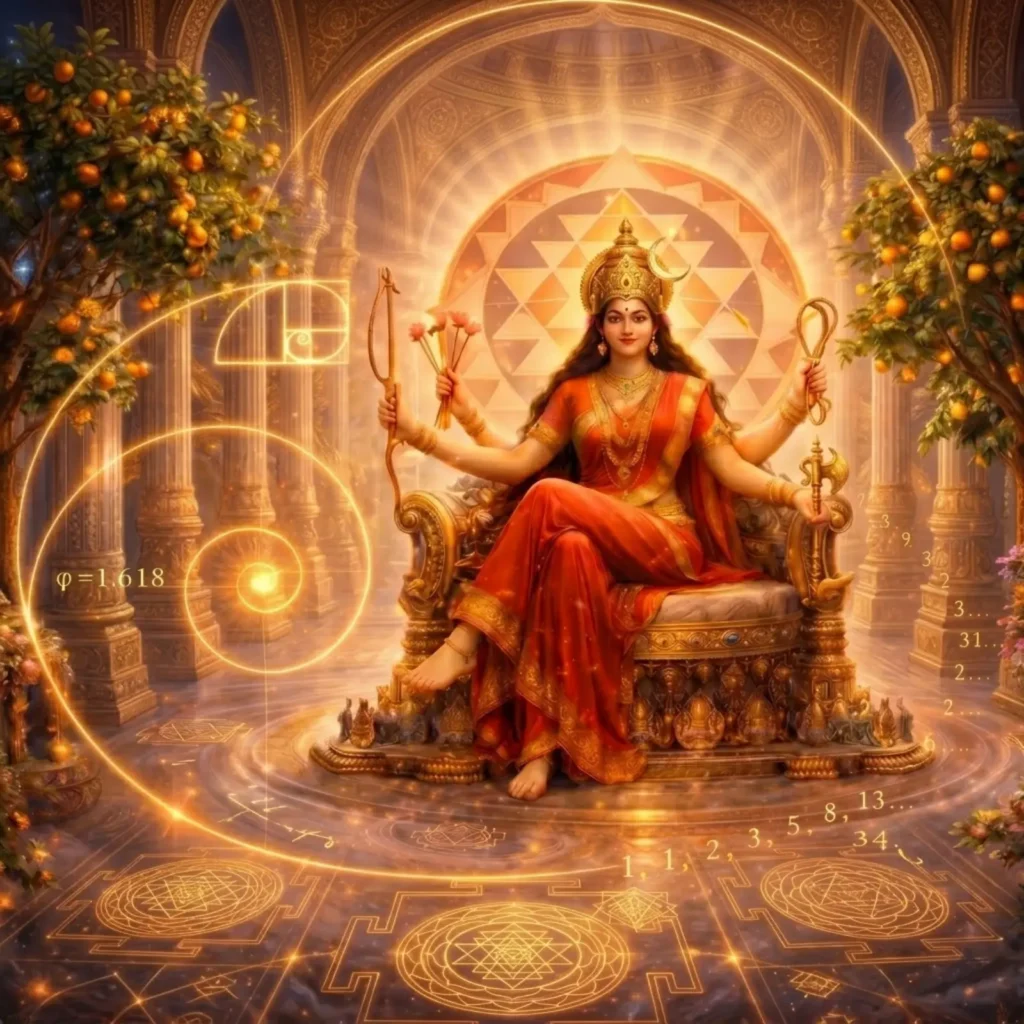
Why do certain faces appear more beautiful than others? This question has been asked across cultures, disciplines, and time, and while answers often drift toward subjectivity – taste, conditioning, familiarity, there remains a quieter, more consistent observation beneath all of this. Certain proportions, certain ratios between features, seem to create a sense of harmony that […]
What Navratri Is Really Asking of Us: The Nine Forms of Devi and Nine Ways of Being
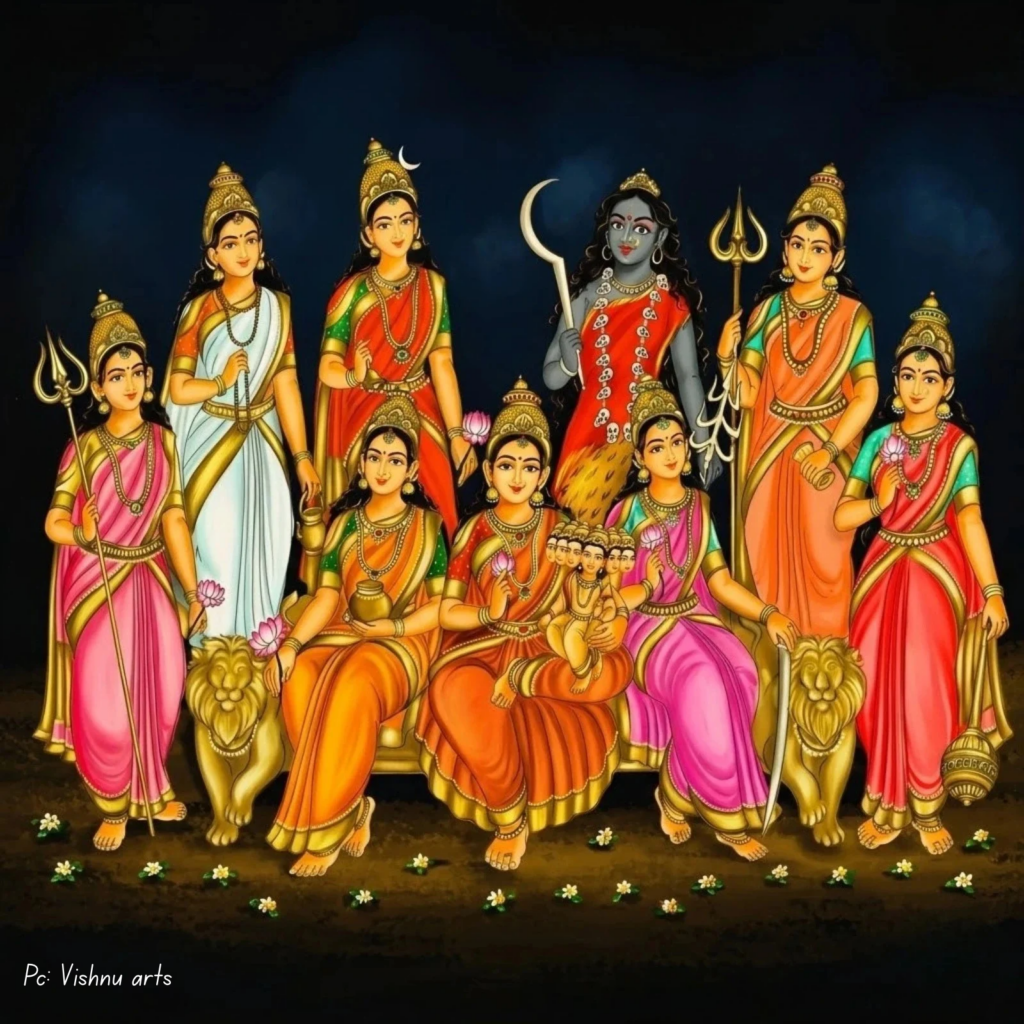
My childhood was filled with stories of Devi told to me by my grandmother at bedtime; only those were not meant to put me to bed but to awaken something within me, though I did not know it then. She did not explain the why or the how of anything. She did not interpret. Probably […]
Psychology of War: What the Mahabharata Reveals About Human Nature and Conflict
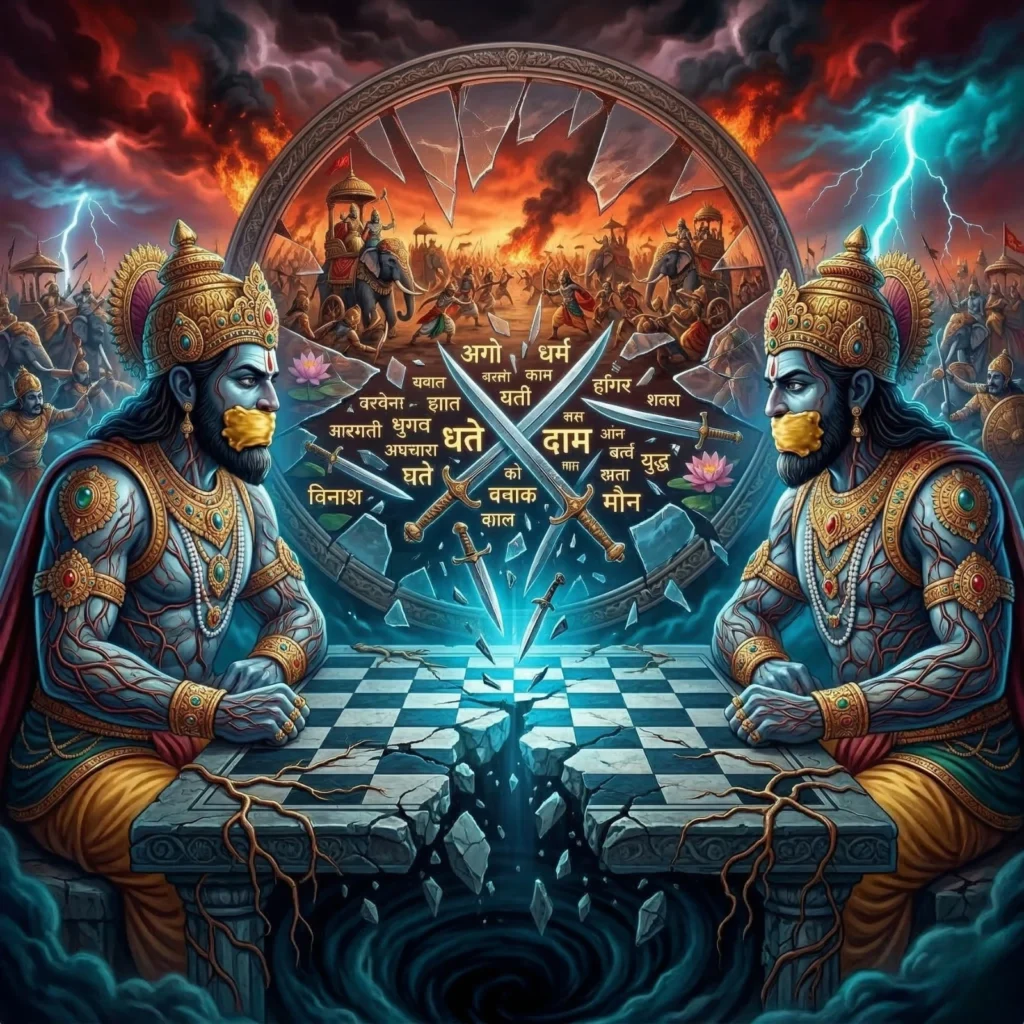
From injustice and wounded pride to the failure of leadership, the Mahabharata offers a timeless lens on how societies slide into conflict. Every generation believes it has become more rational than the last. We build institutions, draft treaties, and develop sophisticated theories of diplomacy, convinced that modern systems have finally moved humanity beyond the brutal […]
The Role of a Mythology Writer in Preserving Ancient Indian Wisdom

When Words Distort Inheritance Few terms are as misunderstood in the Indian knowledge landscape as the word mythology. In common speech, “myth” is often used to mean something imaginary or false. Myth refers to symbolic narratives that encode truth, psychological, cosmological, ethical, and metaphysical. Ancient Indian narratives were vessels of layered knowledge transmitted across generations […]
From Devi to Durga: What Feminine Power Really Means Beyond Rituals

When we think of the goddess in India, the image that often arises is festival-driven: Navratri pandals, Durga idols immersed in water, lamps lit at dawn, chants rising with the beat of drums. These rituals are beautiful, binding families and communities together, reminding us of continuity across centuries. Yet, the question persists: if the Devi […]
Unsung Goddesses of India: The Stories We Forgot to Tell

When people hear the phrase “goddesses from Indian mythology,” the names that surface most quickly are Durga, Lakshmi, Saraswati, or Kali-the goddesses who dominate temples, festivals, and collective memory. But India has always been home to hundreds of other goddesses-fierce, local, nurturing, protective, and wild-whose stories rarely find space in mainstream narratives. They are the unsung […]
How Myths Travel Through Time: From Oral Tradition to Instagram Reels

When we use the English word “myths,” it often feels like a compromise. In India, we do not think of the Ramayana or Mahabharata as “myths” in the sense of fabricated stories. They are Itihasa-“thus it happened.” Yet, in the absence of a better English word, the word “myth” is often used. And these myths, or Itihasa, or the […]
Mythology in the Age of AI: What Happens When Machines Retell Stories

When we use the word “mythology,” it is often because there is no better term in English. But in the Indian context, texts such as the Ramayana and the Mahabharata are not “myths” in the sense of invented tales. They are Itihasa-a word that means “thus it happened.” If not recorded history in the modern sense, they […]
Mythic Mythology vs. Itihasa: Why Stories Change When We Stop Questioning Them

When we hear the word “myth,” it often carries the meaning “fiction” or “fable.” Something imagined. A tale with little claim to truth. Mythology, in turn, is treated as a collection of such myths, neatly categorized as cultural stories but never quite given the weight of history. But in India, this way of framing doesn’t sit well. […]
The Glory of Shiva Mahapurana: Complete Shiva Purana Summary

The Shiva Mahapurana is not just a book about gods; it is a layered text that holds stories, symbols, rituals, and philosophical fragments. At first glance, it appears to be a devotional scripture. But look again, and it becomes a mirror-of consciousness, of archetypes, of human nature unfolding through cosmic metaphor. In this Shiva Mahapurana […]