When we think of the goddess in India, the image that often arises is festival-driven: Navratri pandals, Durga idols immersed in water, lamps lit at dawn, chants rising with the beat of drums. These rituals are beautiful, binding families and communities together, reminding us of continuity across centuries. Yet, the question persists: if the Devi is as vast as our scriptures claim, why do we restrict her to seasonal rituals?
The journey from Devi to Durga is not just mythological. It is a journey into the heart of what feminine power truly means – not as performance, not as ornamentation, but as existence itself.
Devi: More Than a Goddess
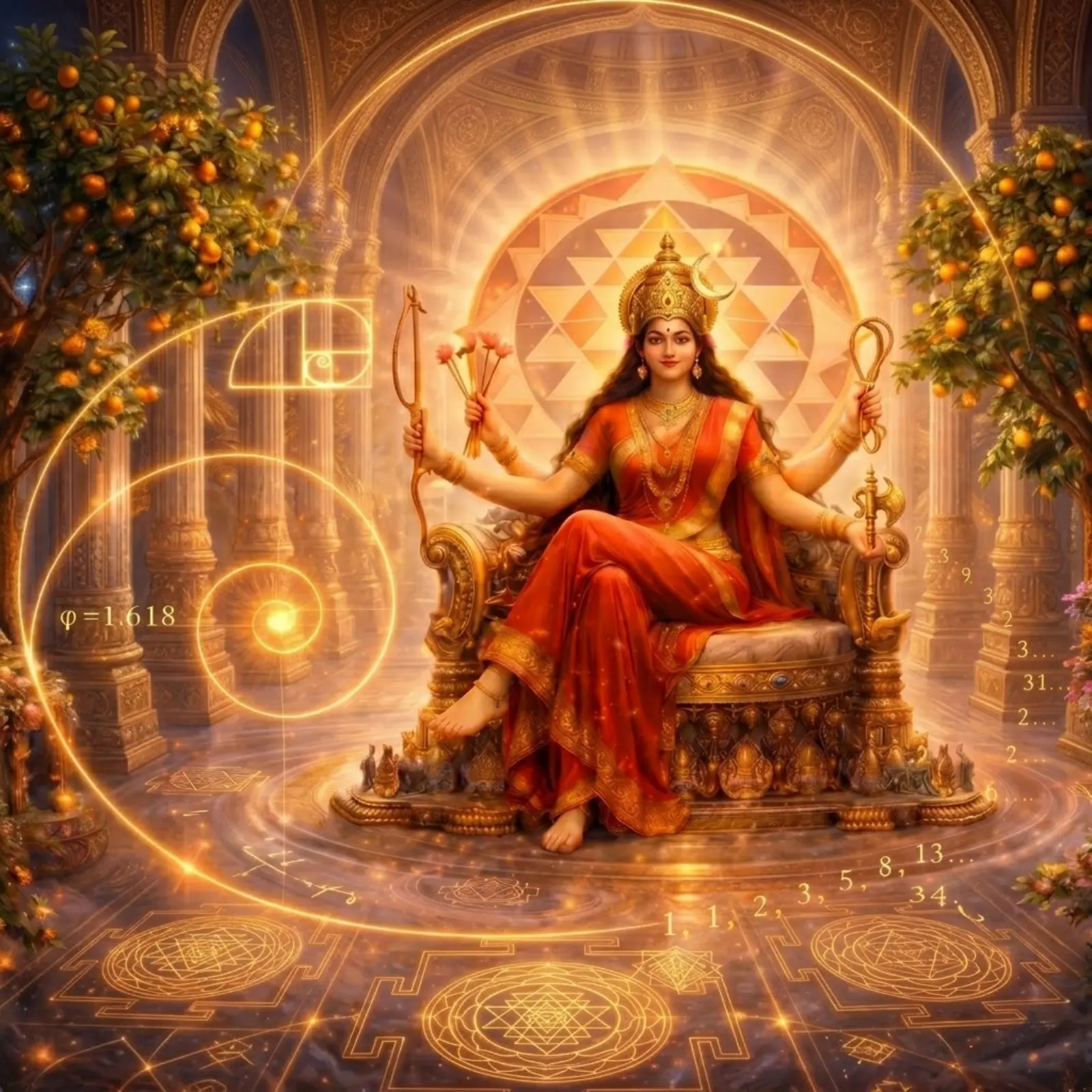
In Mahadevi: The Unseen Truth Behind Existence, I explored how Devi is not just a deity in ancient Hindu history (Indian mythology in the absence of a better expression) but the ground of reality itself. She is not bound by temple walls or by the binaries of “creator” or “destroyer.” She is the current that animates all life. Think of fire: it warms, it illuminates, it burns, it destroys. To call fire “good” or “bad” misses the point. Fire simply is. Devi is like that. She is the unseen force behind birth, sustenance, decay, and renewal. In Sanskrit, she is called Shakti, not a goddess in abstraction but the very energy through which existence moves.
This is why our Itihasa, our epics, place Devi not only in cosmic battles but also in the rhythms of everyday life. She is rivers that both nourish and flood, the soil that both yields harvest and claims it back. To see her merely as a festive idol is to miss her deepest truth.
Durga: Resistance Embodied
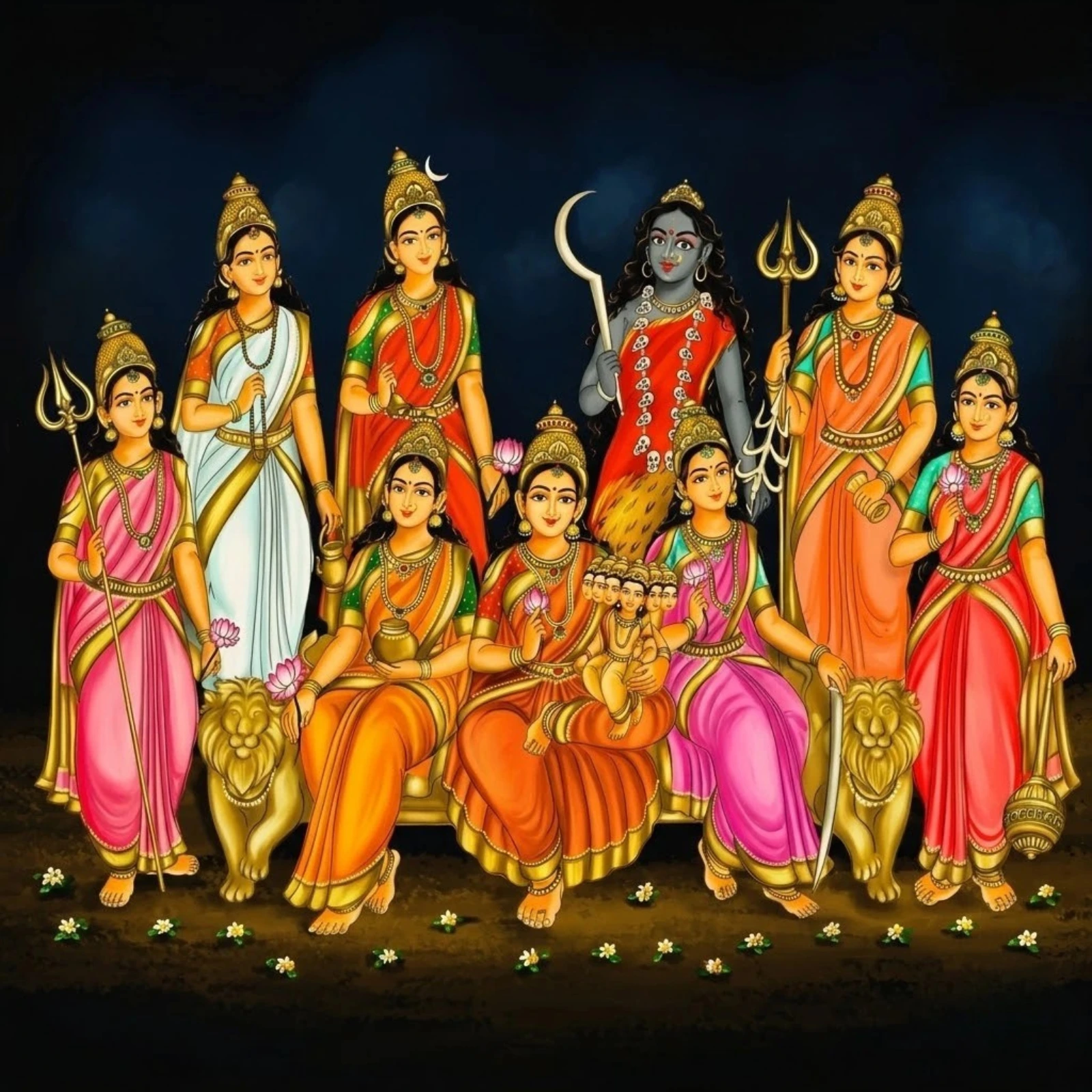
If Devi is the vast, all-encompassing force, Durga is her concentrated expression. The Devi Mahatmyam gives us her most iconic image – the slayer of Mahishasura, the demon who could not be defeated by gods or men. Durga was born when patience broke and when the cosmos itself reached a threshold. Durga represents the moment power ceases to endure and begins to resist. She is not only a goddess but an archetype of transformation. Across time, people have turned to her as the symbol of courage when oppression seems unbreakable.
From Devi to Durga is the shift from infinite potential to decisive action. Devi is the cosmic field while Durga is the sword that cuts through tyranny. And this is not only mythology, it is an echo of us. Every woman who refuses submission in the face of violence embodies Durga. Every community that rises against exploitation invokes her strength. Every individual who confronts their own inner Mahishasura, the demons of fear, addiction, or injustice, participates in her battle.
Beyond Rituals: Living Feminine Power
Rituals are important. They are our memory. They are the rhythm. They are how societies keep stories alive. But to confine feminine power only to ritual is to domesticate it, to reduce it to something safe, seasonal, and ornamental. The truth is that Devi and Durga live beyond rituals. Feminine power is not bound by gender. It is the capacity to create, to nurture, to resist, to dissolve. It is fierce and tender at once. It exists in the earth’s fertility, in rivers breaking their banks, in forests that regenerate after fire.
Contemporary Relevance: Why This Matters Now
Why write about Devi to Durga today? Why does it matter beyond temples and festivals? Because the crises we face, climate change, patriarchal violence, systemic injustice cannot be solved by rituals alone. They demand we remember that Devi is not just worship, she is a worldview. She is not passive divinity, she is an active force.
Durga teaches us that patience has a limit, that silence is not infinite. When thresholds are crossed, power must act. And Kali, who emerges from Durga’s rage, reminds us that destruction itself can be sacred if it clears the way for truth. To see Devi as merely a goddess to be adorned is to blunt her. To live her as Shakti is to awaken.
From Devi to Durga – A Living Journey
The movement from Devi to Durga is not history, it is an everyday reality. It happens whenever potential turns into action, whenever nurturer transforms into resistance, whenever silence becomes voice. Durga does not wait in temples. She does not reside only in scripture. She is already here, in every gesture of courage, in every dignified stand, in every renewal that follows endings.
To honor her is not only to light a lamp, but to brighten that light within and around us. The real question, then, is not whether Devi exists. The question is whether we are willing to recognize her beyond ritual, and let her walk with us in the world.
FAQs on the Journey From Devi to Durga
1. What is the difference between Devi and Durga?
Devi is the all-encompassing feminine force, the very energy that sustains existence. Durga is a specific manifestation of that force, a concentrated form that arises in moments of resistance, most famously in the battle against Mahishasura.
2. What does “Devi to Durga” mean?
The phrase “Devi to Durga” signifies the shift from potential to action, from nurturing presence to protective power. It is the journey of feminine energy when it moves from being the ground of existence to actively confronting injustice and imbalance.
3. Why is Durga important in today’s world?
Durga represents courage, resistance, and the refusal to remain quiet in the face of oppression. In a world facing climate crisis, gender violence, and systemic injustice, Durga reminds us that power is not ornamental but transformative.
4. Is feminine power only about women?
Not at all. Feminine power, or Shakti, is not about gender but about energy. It exists in creation, in nurturing, in resistance, in destruction that clears the way for renewal. Anyone, regardless of gender, can embody this force.
5. How can we live the essence of Devi beyond rituals?
Rituals are important, but they are only the beginning. Living Devi means recognizing the sacredness of creation and resistance in daily life. Standing up for justice, protecting the environment and embracing both tenderness and fierceness as part of existence.
6. Is Kali also part of this journey from Devi to Durga?
Yes. In many traditions, Kali is seen as emerging from Durga’s rage during battle. She is the force that goes beyond even resistance, the uncompromising power that devours illusion. While this blog focuses on Devi to Durga, Kali continues that trajectory of awakening power.