Why do certain faces appear more beautiful than others?
This question has been asked across cultures, disciplines, and time, and while answers often drift toward subjectivity – taste, conditioning, familiarity, there remains a quieter, more consistent observation beneath all of this. Certain proportions, certain ratios between features, seem to create a sense of harmony that the human eye recognises almost instantly, even if it cannot explain why.
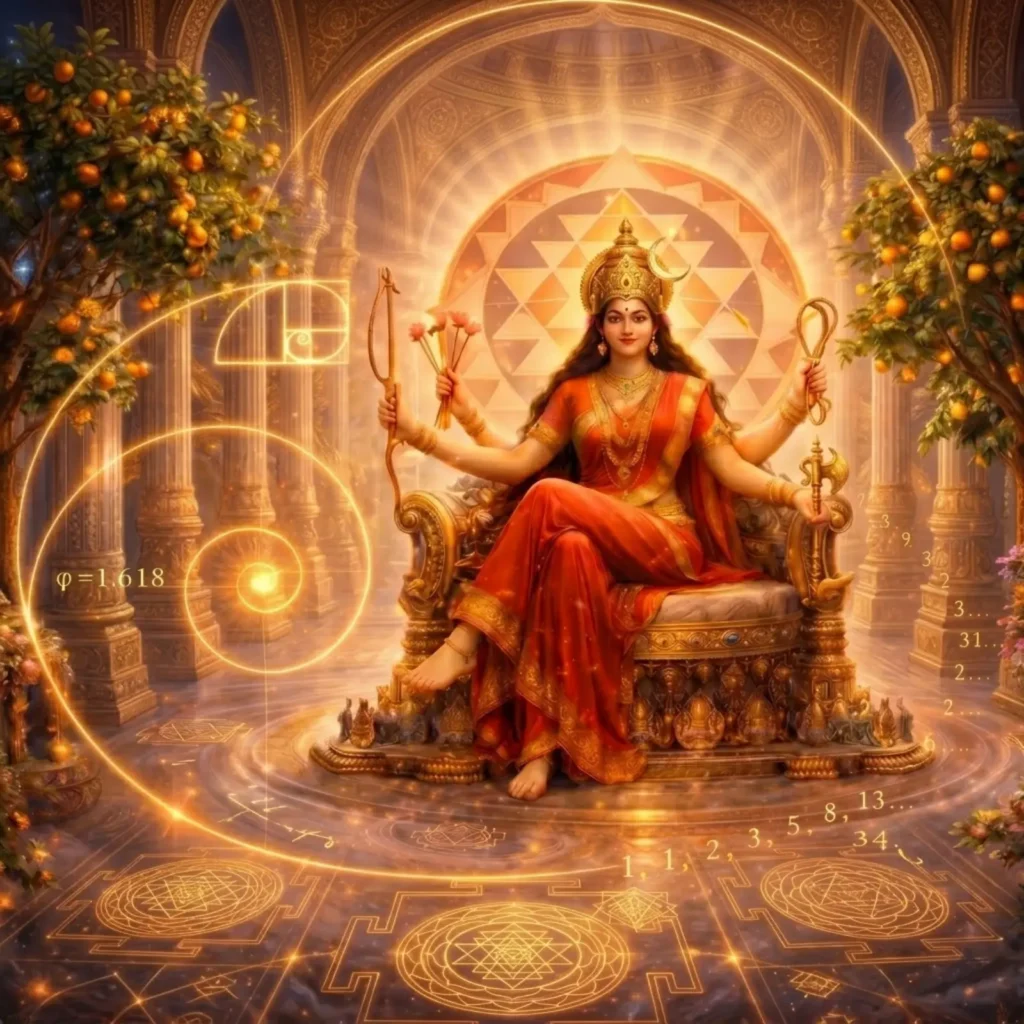
Over time, mathematics has attempted to articulate this phenomenon through what is known as the Fibonacci sequence – a progression in which each number is the sum of the two preceding it. As this sequence unfolds, the ratio between successive numbers approaches a constant value of approximately 1.618, commonly referred to as the golden ratio.
This ratio is often found in discussions of aesthetics, not as a rigid formula that defines beauty, but as a recurring tendency that appears in forms we instinctively find balanced. Studies in design, biology, and even facial analysis have suggested that when the proportions of a face or body align more closely with this ratio, they are more likely to be perceived as harmonious and subsequently attractive.
However, to reduce beauty entirely to a number would be both inaccurate and limiting. What seems to be at work is not a formula, but a principle, one in which the relationship between parts is neither symmetrical nor random, but proportionate in a way that allows complexity to exist without visual tension.
This same principle becomes more visible when we shift our attention from human perception to patterns in nature. The spirals of shells, the arrangement of leaves on a stem, the unfolding of petals in a flower – these are not designed for aesthetic appeal, and yet they consistently exhibit a form of order that mirrors the logic of proportional growth. The golden ratio, in such cases, as we know, is not imposed from outside, it emerges as a consequence of how systems expand efficiently.
It is at this point that an older framework of understanding begins to intersect with this observation.
In the tradition of Lalita Tripura Sundari, beauty is not treated as a superficial attribute or an aesthetic preference. It is understood as a function of structure, an expression of proportion so precise that it holds multiplicity without losing coherence. The name itself, often translated as “the most beautiful across the three worlds,” does not refer merely to appearance, but to a form of balance that operates across levels of existence.
This understanding is not left at the level of abstraction. It is given a geometric expression in the Sri Yantra, a diagram that is frequently encountered as a spiritual symbol but is, in its construction, a remarkably rigorous geometric form.
The Sri Yantra consists of nine interlocking triangles arranged around a central point, or bindu, creating a network of forty-three smaller triangles through precise intersections. Its construction is not intuitive or decorative, it requires exact alignment of angles and proportions, to the extent that even minor deviations disrupt the integrity of the entire figure. What appears visually intricate is, in fact, tightly methodical.
Traditional texts do not describe this geometry in the language of modern mathematics, but they do indicate an awareness of structured complexity. In the Saundarya Lahari, the Sri Yantra also called Sri Chakra is referred to through layered arrangements and precise formations, suggesting that it is not an arbitrary symbol but a constructed representation of reality.
When viewed alongside contemporary understandings of scale and proportion, an interesting parallel begins to emerge. Systems that follow the logic of the golden ratio tend to expand in ways that maintain balance across increasing complexity. The Sri Yantra, when approached structurally rather than symbolically, appears to follow a comparable principle, where each layer relates to the others in a manner that preserves coherence rather than allowing distortion.
This is not to suggest that the Sri Yantra is a direct mathematical encoding of the Fibonacci sequence, nor that ancient practitioners were working with numerical formulations in the way modern mathematics does. However, it does open up a more grounded and perhaps more meaningful line of inquiry.
Is it possible that what we describe today through numbers was once observed through form? That the same patterns of proportion, balance, and expansion were recognised, not through calculation, but through sustained observation and then encoded in geometry?
Mathematics, in this sense, becomes one language among many. Geometry becomes another. Tradition, rather than being dismissed as symbolic or devotional, may be understood as a third mode of preserving insight, one that does not explain, but encodes.
If this is the case, then what we perceive as beauty may not be entirely subjective, nor entirely constructed. It may be, at least in part, a recognition of proportion, of relations that reflect a deeper order present in both natural systems and human perception.
The Sri Yantra continues to exist within a spiritual framework, while the Fibonacci sequence continues to be studied within mathematics. They belong to different domains, and yet, when examined without forcing equivalence, they begin to suggest a shared logic.
What we call mathematics and what we call the Devi may not be separate inquiries. One attempts to measure and describe, the other to encode and express. Between them lies a possibility that neither fully contains.
It is not a conclusion, but a recognition, that the patterns we are identifying today may have been seen before, held differently, and preserved in forms we are only beginning to examine with the tools we now have.
The question, then, is not whether these connections can be definitively proven, but whether we are willing to look at them with enough precision and enough openness to see what they might reveal.