
“How many Hindu gods are there?”
It’s one of the most common questions I encounter when discussing Indian mythology. And the answer is: it depends on how you count.
Some say 33 million. Others insist there’s only one divine reality Brahman manifesting in countless forms. Still others will tell you there are 33 types of deities, not 33 million individual gods, and that this number is symbolic rather than literal.
All of these answers are correct, depending on which philosophical school, regional tradition, or textual source you consult.
This is what makes understanding Hindu gods and goddesses both fascinating and challenging. Unlike religions with a fixed, hierarchical pantheon, Hinduism’s divine landscape is fluid, regionally diverse, philosophically layered, and constantly evolving.
After years of working with these narratives especially excavating the Goddess tradition from patriarchal erasure I’ve learned that approaching Hindu deities requires comfort with multiplicity, contradiction, and the recognition that different perspectives reveal different truths.
So let me offer you a guide to the major Hindu gods and goddesses not as a fixed hierarchy, but as an introduction to the rich, complex, and living tradition of divine forms that have shaped Indian sacred narratives for thousands of years.
What Hindu Mythology Deities and Their Roles Are Really About
The question people usually bring to Hindu deities is borrowed from other traditions: which god do you pray to for which result?
At their core, the devtas and devis of the Indic tradition are expressions of one undivided consciousness taking different forms. Each Hindu deity represents a cosmic function, a principle of existence, rather than an independent personality. Understanding hindu mythology deities and their roles begins here: the divine is not a collection of separate beings. It is one reality appearing in the forms most useful for a given function, a given moment, a given human need.
The Three Functions of the Trimurti: Creation, Preservation, Dissolution
Brahma is the creative principle, the generative intelligence from which new forms emerge. Shri Vishnu is the sustaining principle that holds creation in its right relationship with everything else. Shiva is the transformative principle, the force that dissolves what has completed its purpose so that the next cycle can begin.
These are not jobs assigned to three separate gods. They are the three fundamental operations of existence itself, given form that the human mind can approach and engage with. Each Hindu deity in the larger system represents one of these operations or a specific function within one of them.
Why Every Deity Has a Shakti: The Doer and the Enabler Explained
Every major deity has a consort, and this is not decoration. It is a precise philosophical statement. Brahma creates, but it is Devi Saraswati who carries the imagination and knowledge that makes creation possible. Shri Vishnu sustains, but without Devi Lakshmi there is no abundance through which the universe can function. Shiva dissolves, but Shakti provides the force and intelligence that determines when dissolution is necessary.
The pattern across Hinduism gods and their consorts is this: the god is the doer. The goddess is the enabler. And the enabler is not lesser. She is the current that makes the bulb work. This relationship is described in precise philosophical detail in the Devi Bhagavata Purana.
Understanding Hindu Divinity: Key Concepts
Before diving into specific deities, understand these foundational concepts:
Brahman: The Ultimate Reality
At the philosophical core of many Hindu schools is Brahman the ultimate, formless, infinite reality that pervades everything.
Brahman is not a “god” in the personal sense. It’s pure existence-consciousness-bliss (sat-chit-ananda), beyond attributes, beyond form, beyond comprehension.
So if Brahman is the ultimate reality, why all these gods and goddesses?
Because the infinite is difficult to relate to. The formless is hard to worship. The abstract doesn’t inspire devotion.
So Brahman manifests in countless forms the gods and goddesses allowing humans to relate to the divine in personal, accessible ways.
This is why you can find Hindu texts asserting both “there is only one God” (Brahman) and “there are millions of gods” (manifestations). Both are true, depending on your perspective.
Ishta-Devata: Your Chosen Deity
Hinduism doesn’t demand you worship all gods equally. Instead, it encourages choosing an ishta-devata a “chosen deity” who becomes your personal focus of devotion.
Some devotees connect most deeply with Shiva. Others with Vishnu. Still others with Devi (the Goddess). Your ishta-devata becomes the form through which you access the divine.
This doesn’t mean other deities are false or lesser. It means you’re using one door to enter the same infinite reality that others access through different doors.
The Trimurti: Creator, Preserver, Destroyer
Many introductions to Hinduism mention the Trimurti the three primary male deities who embody cosmic functions:
Brahma: The Creator Vishnu: The Preserver Shiva: The Destroyer
This trinity is often compared to the Christian Trinity, but the parallel is imperfect. The Trimurti isn’t three persons in one God. They’re three distinct deities representing three cosmic processes.
However, here’s what’s fascinating: While the Trimurti is conceptually important, in actual practice, very few people worship Brahma. The vast majority of Hindus are either:
- Vaishnavas (devotees of Vishnu)
- Shaivas (devotees of Shiva)
- Shaktas (devotees of Shakti/the Goddess)
Each of these traditions considers their chosen deity as supreme, with other gods as subordinate manifestations.
As I explored in my article on mythology versus religion, how you understand these deities depends on whether you’re approaching as a practitioner (for whom one may be supreme) or as an outsider (who might see them as equally mythological).
The Trimurti: The Three Primary Male Deities
Brahma: The Creator
Function: Creates the universe at the beginning of each cosmic cycle Consort: Saraswati (goddess of knowledge) Appearance: Four heads (symbolizing the four Vedas), four arms, often holding sacred texts, prayer beads, and water pot Mount: Hamsa (swan or goose)
Brahma holds an unusual position in Hinduism: conceptually essential but practically marginal.
Despite being the creator deity, there are very few temples dedicated to Brahma in India. According to mythology, this is due to a curse. After a dispute with Shiva, Brahma was cursed to never receive widespread worship.
In practice, Brahma’s creative work is done. The universe exists. So devotional focus shifts to Vishnu (who maintains existence) and Shiva (who transforms it).
Vishnu: The Preserver
Function: Maintains cosmic order (dharma) Consort: Lakshmi (goddess of wealth and fortune) Appearance: Blue-skinned, four arms holding conch shell (shankha), discus (chakra), mace (gada), and lotus Mount: Garuda (eagle)
Vishnu is one of the most widely worshipped deities in Hinduism. He is the sustainer of the universe, the protector of dharma, and the deity who incarnates whenever cosmic balance is threatened.
Vishnu’s Ten Avatars (Dashavatara):
- Matsya (fish) – saved humanity from the great flood
- Kurma (tortoise) – supported Mount Mandara during churning of the ocean
- Varaha (boar) – rescued Earth from demon Hiranyaksha
- Narasimha (man-lion) – destroyed demon Hiranyakashipu
- Vamana (dwarf) – reclaimed the three worlds from demon king Bali
- Parashurama (warrior with axe) – destroyed corrupt kshatriya rulers
- Rama (prince of Ayodhya) – hero of the Ramayana, defeated Ravana
- Krishna (divine cowherd and prince) – central figure in Mahabharata and Bhagavad Gita
- Buddha (the enlightened one) – in some traditions, considered an avatar
- Kalki (future avatar) – will arrive at the end of Kali Yuga to restore dharma
The two most popular avatars Rama and Krishna are worshipped so extensively that many devotees consider them independent deities rather than forms of Vishnu.
Shiva: The Destroyer (and Transformer)
Function: Destroys the universe at the end of each cosmic cycle to enable renewal Consort: Parvati (also manifests as Kali, Durga, and other forms) Appearance: Ash-covered skin, matted hair with Ganga flowing from it, third eye on forehead, crescent moon, serpent around neck, trident (trishula) Mount: Nandi (bull)
Shiva is paradox incarnate. He is both ascetic yogi and passionate lover, both destroyer and regenerator, both terrifying (as Bhairava) and benevolent (as Shankara).
Shiva’s Key Forms:
- Nataraja: Cosmic dancer whose movements create and destroy the universe
- Lingam: Abstract phallic form representing creative power
- Ardhanarishvara: Half-male, half-female form uniting Shiva and Shakti
- Dakshinamurti: Silent teacher seated under banyan tree
Shiva’s “destruction” is not malevolent. It’s necessary transformation the end that makes renewal possible. Without Shiva, the cosmos would stagnate.
His followers, Shaivas, consider him the supreme deity, with Vishnu and Brahma as subordinate manifestations.
Hindu Goddesses and Their Significance in the Indic Framework
The Indic tradition has one of the most sophisticated understandings of feminine divine power of any tradition in the world. Every Hindu goddess represents the enabling principle, the Shakti, without which the male deity she is paired with cannot function at all.
Devi Saraswati carries the imagination and knowledge that makes Brahma’s creation possible. Devi Lakshmi carries the abundance and wellbeing that makes Vishnu’s sustaining possible. Shakti carries the force that makes Shiva’s transformation possible. Without them, the gods are, in the tradition’s own words, Shava, dead bodies.
The Forms of Devi: From Saraswati to Kali
Devi Saraswati is the goddess of knowledge, speech, and creative intelligence, the imaginative faculty that makes thought and expression possible. Devi Lakshmi is the goddess of wealth, wellness, and abundance in all forms, the sustaining generosity of the universe. Durga is the warrior form who restores order when the balance of existence is threatened.
The Devi Mahatmyam, the scripture, describes this relationship in 700 verses of philosophy and narrative.
And Kali, the most misunderstood form of the Goddess, is the primordial energy itself, the consciousness before time began. Each of these is not a separate goddess. Each is a different mode of one primary energy. All these forms point toward Mahadevi, the great goddess who is the source of all explored in full here.
The Tridevi: The Three Primary Goddesses
Just as the Trimurti represents male divine functions, the Tridevi represents feminine divine power:
Saraswati: Goddess of Knowledge
Function: Wisdom, learning, arts, music, speech Consort: Brahma Appearance: White-clad, four arms holding veena (musical instrument), book, mala (prayer beads), and water pot Mount: Hamsa (swan)
Saraswati is invoked by students before exams, by musicians before performances, by writers before composition. She represents not just intellectual knowledge but the creative arts and eloquent expression.
Her white garments symbolize purity of knowledge. The veena represents harmony. The book is the Vedas sacred knowledge itself.
Lakshmi: Goddess of Wealth and Fortune
Function: Prosperity, abundance, beauty, grace Consort: Vishnu Appearance: Golden or red-clad, four arms, often standing on lotus, flanked by elephants Mount: Owl
Lakshmi represents both material and spiritual wealth. She is fortune, abundance, beauty, and the auspiciousness that enables success.
Worshipped especially during Diwali, Lakshmi is one of the most popular goddesses in Hindu homes. Small businesses often have her image, and Friday is considered especially sacred to her.
Parvati: The Great Goddess
Function: Love, fertility, devotion, divine power (Shakti) Consort: Shiva Appearance: Two arms (as Parvati), benevolent form; transforms into Durga (warrior), Kali (fierce destroyer) Mount: Lion (as Durga)
Parvati is the gentle, devoted wife of Shiva. But she is also Shakti the primordial cosmic energy that powers creation itself.
In her fierce forms Durga and Kali she becomes the slayer of demons, the protector of dharma, the force that triumphs when all male gods fail.
As I’ve explored extensively in my work on the Goddess tradition, Parvati/Durga/Kali represents a profound theological claim: the ultimate power in the universe is feminine.
This is not “consort of Shiva” as subordinate. This is Shakti as the source from which even male gods derive their power.
Other Major Deities
Ganesha: Remover of Obstacles
Function: Wisdom, new beginnings, removing obstacles Appearance: Elephant head, large belly, four arms, often holding sweets Mount: Mouse
Ganesha is perhaps the most universally worshipped Hindu deity. Before any new venture a business, a journey, a wedding, an exam Hindus invoke Ganesha.
Why the elephant head? According to mythology, Shiva beheaded his own son (not knowing who he was) and later replaced the head with that of an elephant.
The symbolism is rich: the large head represents wisdom, the big ears suggest listening, the small mouth shows speaking less, the elephant’s ability to move obstacles represents Ganesha’s primary function.
Hanuman: Divine Devotee
Function: Strength, devotion, service, courage Appearance: Monkey-faced, muscular, often depicted leaping or carrying mountain Associated with: Rama (whose devoted servant he was)
Hanuman is unique among Hindu deities because he himself is a devotee the ultimate bhakta (devotee) of Rama.
Featured prominently in the Ramayana, Hanuman embodies perfect devotion, incredible strength, and selfless service. His is one of the most common names chanted in times of difficulty.
Krishna: The Divine Cowherd
Function: Avatar of Vishnu, teacher of Bhagavad Gita, divine lover Appearance: Blue-skinned, peacock feather crown, often playing flute Associated stories: Stealing butter as child, dancing with gopis (cowherd women), teaching Arjuna on battlefield
Krishna is simultaneously mischievous child, divine lover, wise teacher, and fierce warrior. He is perhaps the most multi-dimensional deity in Hinduism.
For Vaishnavas, Krishna is not an avatar but the supreme form of God himself, with Vishnu as his expansion rather than the reverse.
The Bhagavad Gita Hinduism’s most influential philosophical text is Krishna’s teaching to the warrior Arjuna about dharma, action, devotion, and liberation.
Rama: The Perfect King
Function: Avatar of Vishnu, ideal of dharma Appearance: Blue-skinned prince, bow and arrow Consort: Sita Associated story: The Ramayana
Rama represents ideal kingship, perfect adherence to dharma even at personal cost, and the victory of good over evil (symbolized by his defeat of demon king Ravana).
Celebrated during Dussehra and Diwali, Rama’s story has shaped concepts of duty, honor, and righteous rule across South and Southeast Asia for millennia.
Durga/Kali: The Warrior Goddess
Function: Destroyer of evil, protector of dharma Appearance (as Durga): Ten arms holding weapons, riding lion, beautiful warrior Appearance (as Kali): Dark-skinned, four arms, garland of skulls, tongue out, standing on Shiva
Durga was created when all male gods combined their powers to defeat the buffalo demon Mahishasura. She is the concentrated power of the divine feminine.
Kali is her most fierce form the goddess of time, death, and transformation. Despite her terrifying appearance, Kali represents the destruction of ego and the liberation that follows.
As I’ve argued in my work on the Goddess tradition, the marginalization of Durga and Kali in favor of their “gentle” form Parvati is a patriarchal interpretation. The fierce Goddess is not a corruption she’s the primordial power.
Regional and Specialized Deities
Beyond the major deities, Hinduism includes countless regional and specialized gods and goddesses:
Kartikeya/Murugan: Son of Shiva and Parvati, god of war, especially popular in South India Ayyappa: Regional deity of Kerala, son of Shiva and Mohini Jagannath: Form of Vishnu especially worshipped in Odisha Venkateswara/Balaji: Form of Vishnu at Tirupati, one of the wealthiest temples in the world The Ashta Dikpalas: Eight guardians of directions The Navagrahas: Nine planetary deities Countless local deities: Village goddesses, river goddesses, mountain gods
Each region, each community, each temple may have its own deities with local stories and significance.
Understanding the Multiplicity
If you’re feeling overwhelmed by the sheer number of deities, remember:
It’s not polytheism in the Western sense. Most Hindu philosophical schools consider all these forms as manifestations of one ultimate reality. The multiplicity is a feature, not a bug it allows different people to connect with divinity in the way that resonates for them.
You’re not expected to worship them all. As discussed, Hinduism encourages choosing your ishta-devata and focusing your devotion there.
The stories are symbolic. As I’ve explored in my articles on what mythology actually means and the function of mythology, these narratives encode philosophical insights, psychological patterns, and ethical teachings. They’re not meant to be read as literal history.
Regional variation is normal. The same deity may be understood quite differently in Tamil Nadu vs. Bengal vs. Rajasthan. This diversity is not contradiction it’s the natural evolution of living tradition.
Conclusion: The Living Pantheon
Hindu gods and goddesses are not historical artifacts. They’re living presences in the devotional and cultural lives of over a billion people.
They appear in daily puja (worship), in festivals throughout the year, in art and architecture, in names given to children, in stories told to educate and inspire.
Understanding them requires moving beyond simple categorization. They are simultaneously:
- Philosophical concepts (aspects of Brahman)
- Devotional focuses (personal gods who respond to prayer)
- Literary characters (heroes and heroines of epic narratives)
- Cultural symbols (representations of values and ideals)
- Psychological archetypes (patterns of consciousness and behavior)
As I’ve emphasized throughout my work from exploring how colonial categories distort understanding to examining the relationship between mythology and religion how we approach these deities shapes what we can learn from them.
They’re not “just mythology” in the sense of false stories. They’re not “gods” in the sense of separate supernatural beings competing for worship. They’re forms through which the infinite becomes accessible, through which meaning is made, through which humans have oriented themselves toward the sacred for thousands of years.
And they continue to do so today.
Frequently Asked Questions
Hindu gods and goddesses are symbolic manifestations of deeper cosmic principles rather than separate, competing beings. Their roles map the fundamental operations of existence. Brahma represents creation and generative intelligence, Vishnu represents preservation and cosmic balance, and Shiva represents transformation and the dissolution of what has completed its purpose. The goddesses express the power that enables these functions: Saraswati supports creation through knowledge, Lakshmi supports preservation through abundance, and Shakti supports transformation through force. Other deities represent principles such as wisdom, protection, prosperity, healing, and the removal of obstacles. Together, they make abstract philosophy relatable while pointing toward one ultimate reality or consciousness appearing in many forms.
Trimurti means the three-formed one. Tri means three and Murti means form. It refers to the three primary functions of existence: creation, preservation, and dissolution, personified by Brahma, Vishnu, and Shiva. Brahma represents the origin and creative intelligence of existence. Vishnu preserves cosmic order and appears through avatars when balance declines. Shiva dissolves what has completed its purpose, making renewal and spiritual liberation possible. The idea of Trimurti presents these deities as three expressions of one cosmic reality rather than three unrelated divine beings.
Hindu goddesses represent Shakti, the fundamental energy that enables all existence and divine action. Saraswati embodies knowledge and creative intelligence, Lakshmi represents prosperity and sustaining abundance, Durga represents protection and strength, and Kali represents transformation and the destruction of illusion. The feminine divine is not secondary or decorative. Saraswati enables Brahma’s creation, Lakshmi enables Vishnu’s preservation, and Shakti enables Shiva’s transformative power. In the Shakta tradition, Mahadevi is the supreme principle from which the gods themselves draw their capacity to act.
Hinduism does not define a fixed number of gods because divinity is understood as infinite in expression. Ancient tradition speaks of 33 types of divine beings or devas, not 33 million separate gods as the number is often misquoted. These categories represent different cosmic principles and forces of existence. When their forms, avatars, regional manifestations, and aspects are included, the number becomes much larger. Most traditions and devotees focus on particular forms while recognizing that all of them point toward one underlying consciousness or ultimate reality.
The 33 types of devas are grouped as 12 Adityas, 11 Rudras, 8 Vasus, and 2 Ashvins. The Adityas are solar principles connected with time and cosmic order. The Rudras are transformative principles associated with Shiva. The Vasus represent aspects of material and elemental existence, including earth, water, fire, wind, sky, moon, stars, and sun. The Ashvins are twin deities associated with healing and medicine. Together, these 33 categories describe a framework of divine principles through which existence operates.
Different Hindu traditions answer this in different ways. Shaiva traditions hold Shiva as supreme. Vaishnava traditions hold Vishnu or Krishna as supreme. Shakta traditions hold Mahadevi, the great Goddess, as the supreme principle. Advaita philosophy teaches that these deities are forms of one undivided reality, often described as Brahman. Gods are frequently associated with consciousness, while goddesses express Shakti or divine energy, but the two are inseparable. Hinduism therefore allows devotion to a chosen form while also recognizing a deeper unity behind all forms.
Each Hindu deity has names, powers, and symbols that express deeper philosophical meanings. Shiva represents transformation and the dissolution of ego, while Vishnu represents preservation and balance. Lakshmi signifies prosperity, Saraswati represents wisdom and creative expression, Durga symbolizes protection, and Kali represents radical transformation. Ganesha symbolizes intellect, new beginnings, and the removal of obstacles. These powers are not simply supernatural abilities. They represent qualities and principles that devotees can understand, cultivate, and apply in daily life.
The relationships among Hindu deities are symbolic and reflect universal patterns of interdependence. Shiva and Parvati represent the union of consciousness and energy. Vishnu and Lakshmi symbolize the relationship between cosmic order and prosperity. Brahma and Saraswati connect creation with knowledge. These divine relationships may resemble human family bonds, but they also communicate philosophical ideas about balance, cooperation, and unity. Even conflicts in their stories often serve as metaphors for inner struggles and the restoration of harmony.
Both traditions include many deities and rich mythological narratives, but their underlying philosophies differ. Greek and Roman gods were generally presented as distinct personalities with individual powers, limitations, and conflicts. Hindu deities are often understood as expressions of a unified cosmic reality and are connected to philosophical systems exploring consciousness, existence, karma, and liberation. Some surface similarities exist, but treating the traditions as equivalent can overlook important theological and cultural differences.
The physical features of Hindu deities communicate philosophical ideas through visual symbolism. Shiva’s third eye represents higher awareness and the destruction of illusion. Multiple arms indicate the ability to perform several cosmic functions simultaneously. Weapons may represent the defeat of ignorance or harmful forces, while lotuses can symbolize purity and spiritual awakening. Hand gestures and objects also convey protection, wisdom, abundance, or fearlessness. This iconography makes complex teachings easier to understand and provides a focus for worship and meditation.
Hindu traditions are generally open to sincere seekers regardless of their background. A person may study, meditate upon, or respectfully worship Hindu deities without being born into a Hindu family. Meaningful practice, however, requires respect for the tradition’s cultural, ritual, and philosophical context. Learning from authentic sources and qualified teachers can prevent superficial or inaccurate interpretations. A sincere and thoughtful approach allows spiritual engagement while remaining sensitive to the communities from which these practices come.
Continue Your Journey
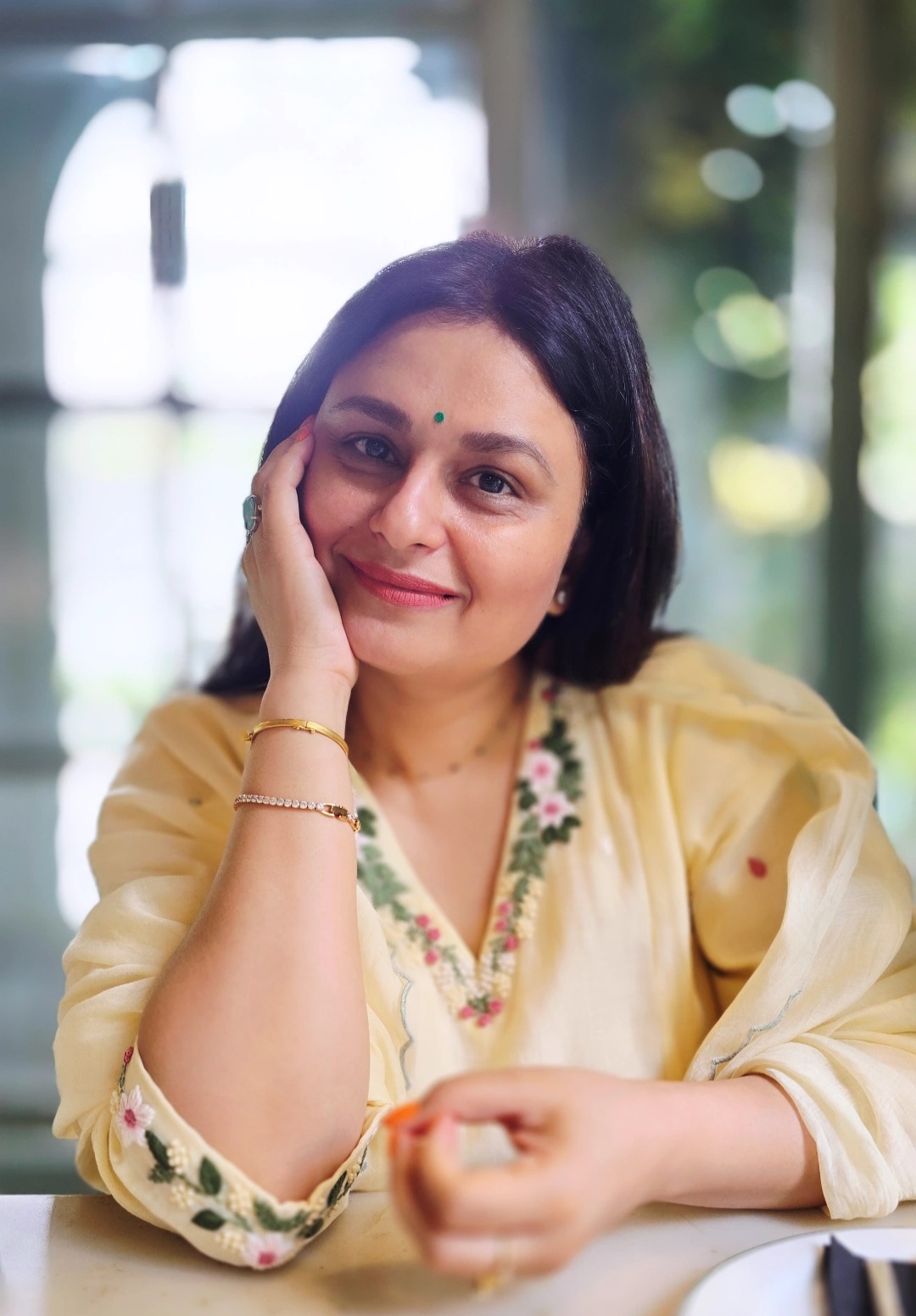
About the Author
Priyanka Sharma Kaintura
Priyanka Sharma Kaintura is a mythology writer, author, and speaker
dedicated to excavating narratives—especially feminine ones—that have
been buried by colonialism and patriarchy. After two decades in
corporate communication, she now writes full-time, challenging
frameworks that reduce sacred narratives to “mere mythology.”
Her books include
Mahadevi: The Unseen Truth Behind Existence
and
My Jiffies: Narration of Moments, Unadulterated and Unpackaged
.


