Introduction: The Enigma of Durga
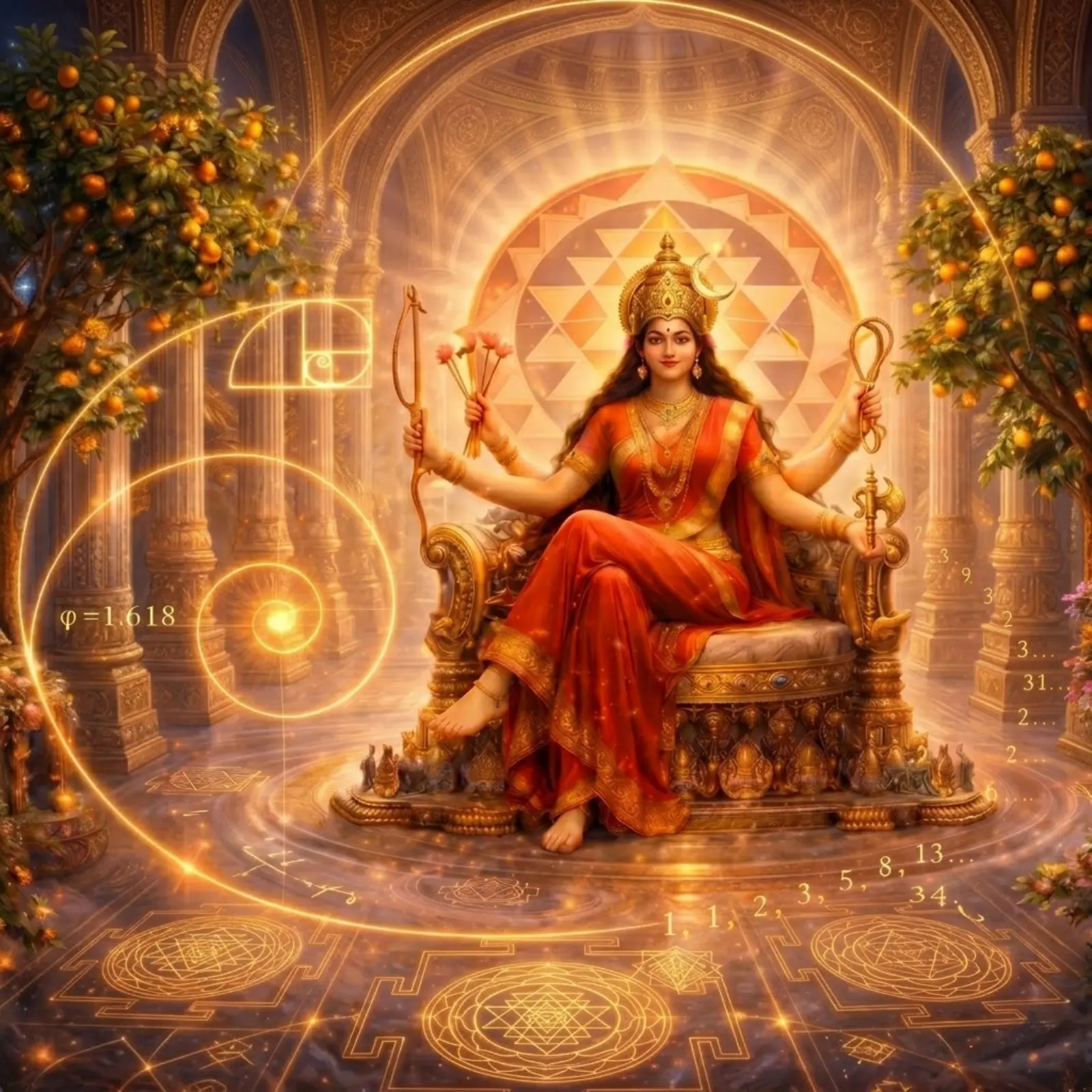
Durga is more than just a goddess; she is an energy, an enabler, and a force that shapes the universe. The Devi Mahatmyam, a sacred Hindu scripture, beautifully illustrates how the divine feminine intervenes in battles, empowers righteousness, and restores cosmic balance. This legend not only reflects her cosmic influence but also helps us understand “What is Durga” in the context of devotion and dharma. It finds a remarkable parallel in the epic battle between Ram and Ravana, where the presence of Saraswati and Ambika played a decisive role.
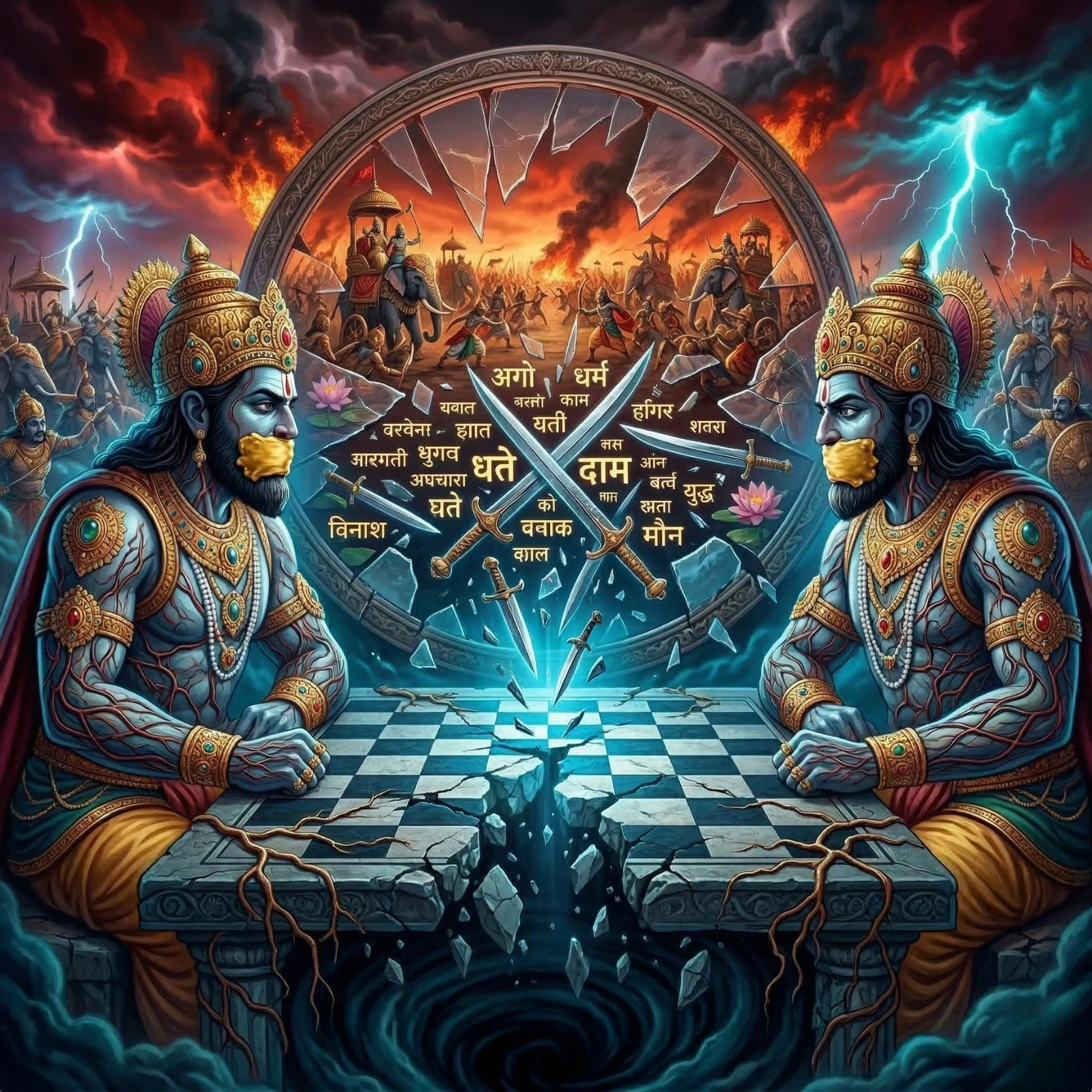
The Battle Between Ram and Ravana: A Divine Intervention
During the war between Ram and Ravana, an unusual situation arose. Ravana, despite being the enemy, started making statements in favor of Ram. It was an awkward situation; why would an adversary suddenly glorify his opponent? Ram was perplexed, unable to decide whether it was right to slay someone who spoke like a devotee of God.
A high-level meeting was called among the gods and goddesses to decipher this mystery. The council concluded that Ravana’s words had to be strategically influenced, and for this, they sought the help of Goddess Saraswati, the deity of wisdom and speech.
The Role of Goddess Saraswati: Wisdom as a Weapon
Saraswati, known for her intellect, was assigned the task of resolving this crisis. She used her subtle vac shakti and communication skills to ensure that Ravana made statements that would infuriate Ram enough to take action. As a result, Ram ultimately slew Ravana, cutting him into two halves.
But Ravana did not perish, he had a boon from Brahma, the divine creator, ensuring his survival. This moment was pivotal, as it made Ravana realize the true power of the feminine force.
Ravana’s Realization: The Power of the Divine Feminine
Ravana, one of the most learned Brahmins of his time, now understood that gods and goddesses were a team, one as the doer and the other as the enabler. He decided to invoke the strongest enabler of warfare—Ambika, the fiercest form of the divine feminine. Through prayers and rituals, he successfully won her favor, and she agreed to support him in battle.
When Ram received this intel, he realized that defeating Ravana would now be nearly impossible unless he outdid him in divine grace.
The Significance of Ambika in Devi Mahatmyam
Ram learned that behind the fiery warrior goddess, there was a gentle and compassionate Ambika, who had a deep admiration for the rare blue lotus. As narrated in Devi Mahatmyam, Ram set out to gather 108 blue lotuses to honor Ambika.
Hanuman traveled far and wide, collecting the lotuses, but by Shashti (the sixth day of Navratri), they had gathered only 107. They were short by one.
Determined to complete the ritual, Ram, known for his mesmerizing blue-lotus-like eyes, prepared to pluck out one of his own eyes to fill in for the missing lotus. This act of pure devotion melted Ambika’s heart. On Ashtami (the eighth day), she appeared before Ram and assured him that she would no longer support Ravana.
The battle soon turned in Ram’s favor.
- On Shashti (the sixth day), Ram began the ritual.
- On Ashtami (the eighth day), Ambika withdrew her blessings from Ravana.
- On Dashami (the tenth day), Ravana was finally slain.
This divine intervention symbolizes how love, surrender, and devotion to Her can invoke the divine feminine, who can change the game in your favor in a few precious moments.
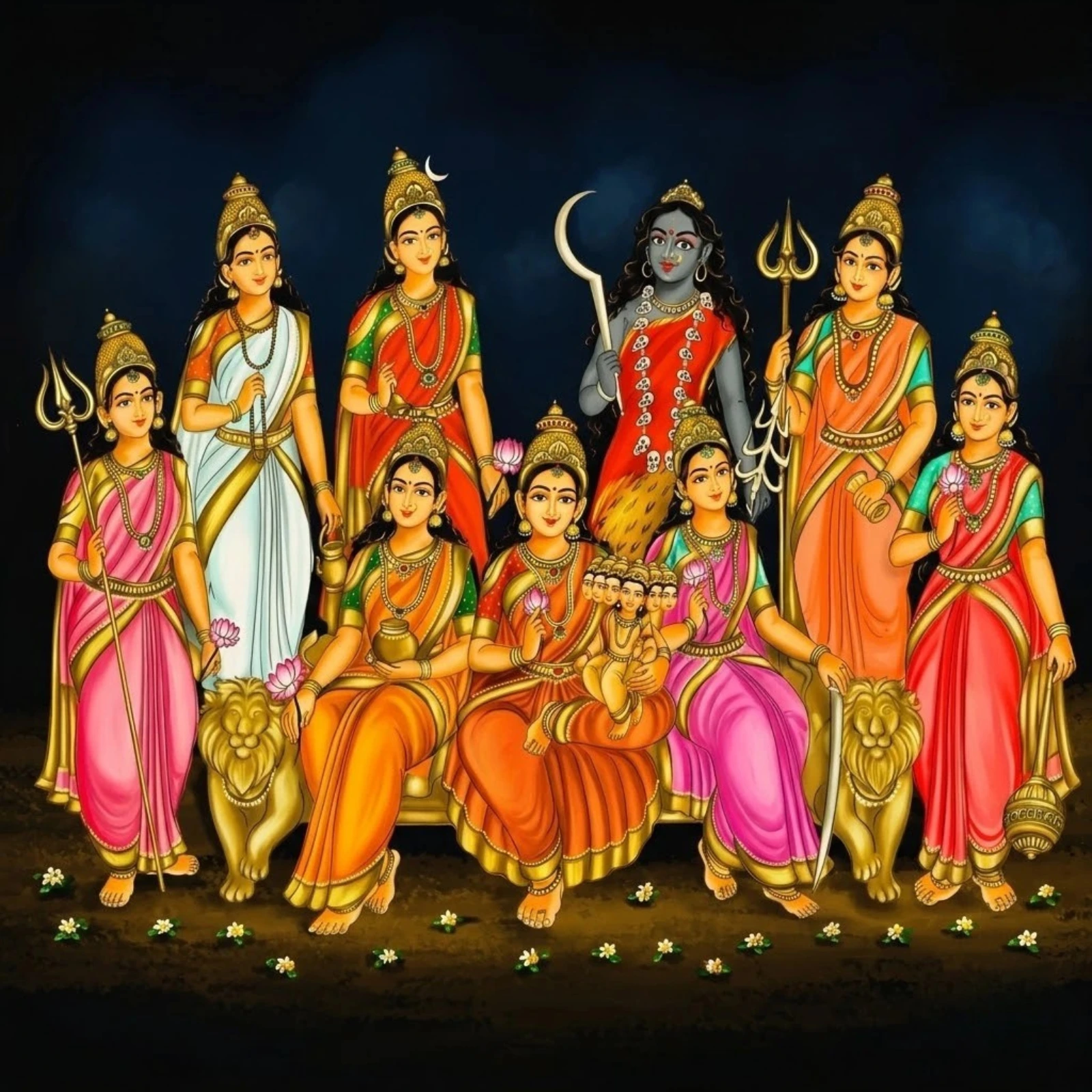
What is Durga? The Many Forms of the Divine Feminine
To truly grasp Durga’s meaning in both scriptural and lived reality, we must look at her as Shakti—the power that enables. The story above illustrates how different forms of Durga shape outcomes:
- Durga as Wisdom—Saraswati, who influenced Ravana’s words, enabling his fall.
- Durga as Strength—Ambika, who initially supported Ravana but was moved by Ram’s devotion.
- Durga as the Unseen Force—The divine feminine as Sita, who ensured the right course of events.
But Durga is not limited to mythology.
Finding Durga in Everyday Life
Durga exists within every woman and every moment of feminine energy that enables life to move forward. She teaches us not only about divine intervention but also about inner resilience; this is the meaning of Durga that transcends ritual and religion. She is present in the wisdom in your mother’s advice. The deep sigh in your beloved’s heart. The silent courage in your daughter’s spirit.
Durga is the strength, the sorrow, the power, and the presence of the divine feminine everywhere.
Conclusion: The Eye to Find Durga
We often search for strength externally, but Durga is within us, in every challenge, every battle, and every moment of perseverance. To understand what Durga is in the truest sense is to recognize her not just as a mythological figure but as an inner force guiding transformation.